Kitchen rescue 6 min read
Why is my beef swimming in grey water?
The pan fills with grey liquid and the beef gets smaller by the minute. Here’s where it comes from, what to look for on the label, and how to get a proper brown.
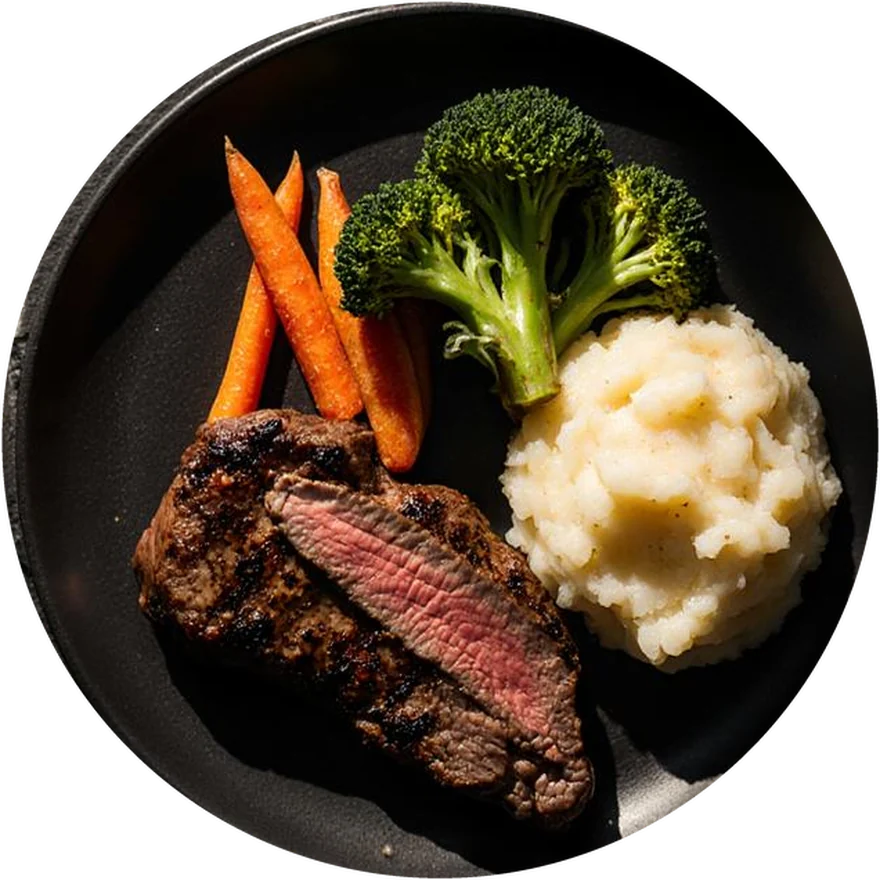
- Dad
Why is my steak having a bath?
- Ellie
Is it meant to be grey?
- Mum
Not if your dad had let the pan heat up.
You put a good piece of beef in the pan, and two minutes later it’s sitting in a grey puddle, getting smaller by the second. You may have seen videos online saying it’s all water and starch that somebody pumped in. Beef can sometimes have things added, and if it has, the pack should say so. But beef with nothing added at all makes that puddle by itself.
You can’t stop beef shrinking. You can stop it stewing, and that only takes a hot pan and a bit of patience.
Beef is mostly water
Muscle is roughly three quarters water. When it heats up, the proteins in the meat tighten and squeeze some of that water out, a bit like wringing out a sponge. Every piece of beef does it, including beef with nothing added.
It’s not a small amount, either. In cooking tests published by the American government, steaks grilled until only a little pink or none was left came out about a fifth lighter than they went in. Plain mince fried in a pan lost around a third of its weight, largely water plus some melted fat. The more you cook it through, the more it shrinks.
So what’s the grey stuff?
Largely the beef’s own water. It carries proteins and myoglobin, the pigment that makes raw beef red, which turns grey brown when it’s heated. Add any fat that melts out and you have the puddle.
That red liquid in the pack before you cook it is mostly water and myoglobin, not blood. It’s much the same as the liquid in the pan, just before it’s been heated. The grey bits that float about in the pan are thought to be meat proteins clumping together as they cook, with a little fat. They look odd, but they’re part of the meat.
Why it stews instead of browning
In an open pan, water can’t get hotter than 100°C, and browning needs a hotter, drier surface than that. If the pan is crowded or not hot enough, water comes out of the meat faster than it can boil away. The pan gets stuck at simmering point, and your beef poaches in its own juices instead of turning brown and tasty.
In other words, a crowded pan makes soup. A hot pan with a bit of room makes dinner.
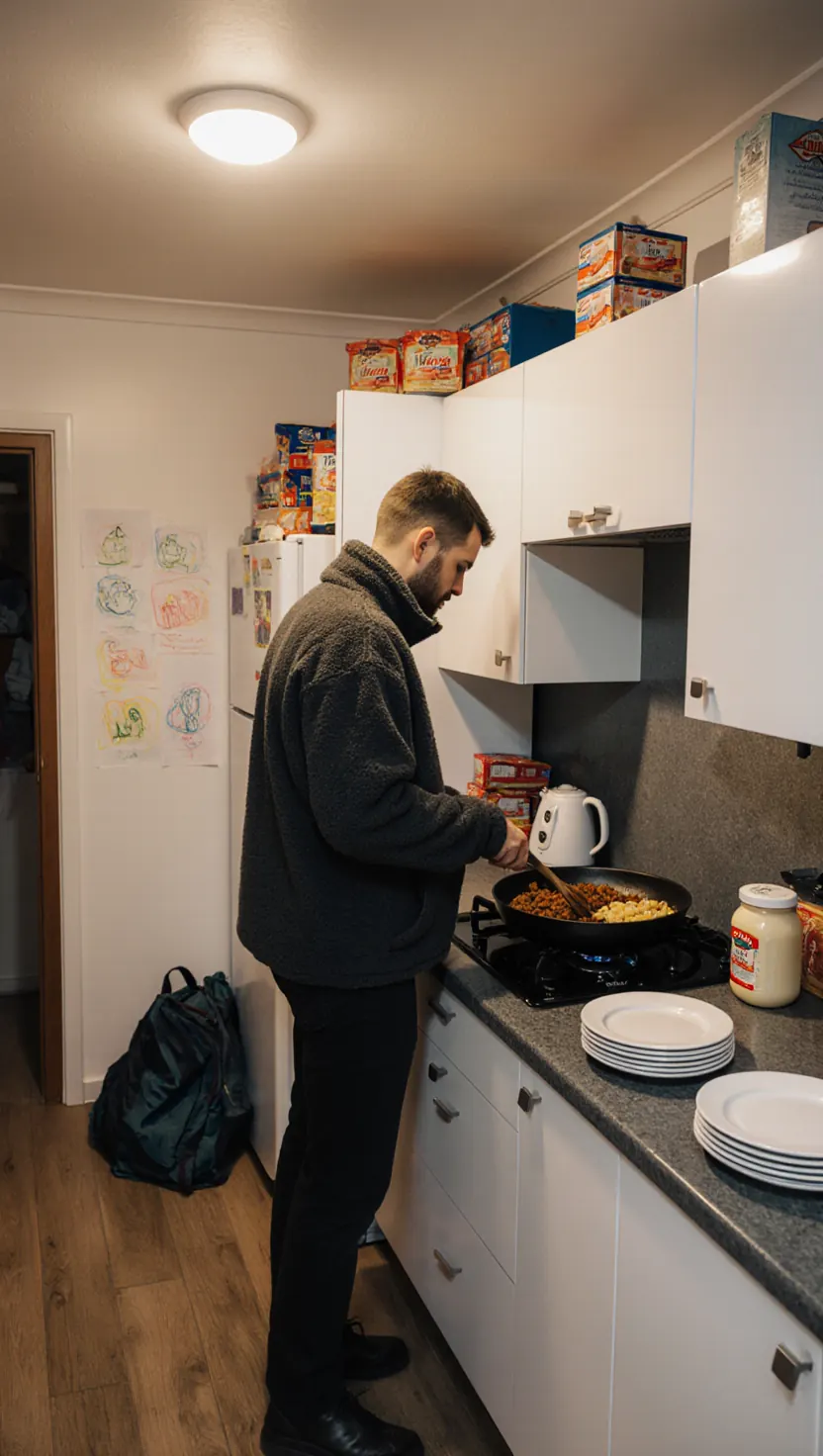
How to get a proper brown
- Don’t wash raw beef: it only splashes bacteria round the sink
- Take it out of the pack and pat it dry with kitchen paper, then bin the paper and wash your hands
- Get a heavy pan properly hot before the beef goes in
- Brown mince in smaller batches, moving each browned batch to a clean dish, then put it all back in the pan to cook through
- Let it colour before you move it or break it up
- Keep the lid off, so the steam can escape
- If liquid pools, tilt the pan away from you and spoon it into a heatproof bowl, with the children kept back from the hob. Let it cool and bin it, rather than pouring it down the sink
Beef that’s been frozen usually leaks more liquid as it thaws, because ice crystals damage the muscle. Thaw it in the fridge in a dish that catches the drips, then pat it dry before it goes in the pan. Our guide to forgetting to defrost covers the rest.
Pink or cooked through?
Steaks and whole joints of beef can be served pink in the middle, as long as the outside is properly seared. The Food Standards Agency explains that on whole cuts, any bacteria sit on the outside.
The exception is beef that has had anything injected into it, or has been made from pieces joined together, because that can carry bacteria inside. If the label mentions added water, a solution or formed meat, follow the cooking instructions on the pack, and if in doubt, cook it all the way through.
Mince, burgers, sausages and rolled joints always need cooking all the way through, until they’re steaming hot with no pink left and juices that run clear. That goes for posh mince too: the agency says even burgers made from good quality, expensive meat carry the same risk.
When something has been added
Plain beef with nothing added doesn’t need an ingredients list, because it only has one ingredient. So if your beef has an ingredients list, it’s worth a look.
Once water or anything else goes into raw beef, the law stops treating it as plain fresh meat. If added water makes up more than 5% of a joint, steak or slice, the name of the food has to say so, with words like “with added water”. That isn’t always on the front, so check the back too. Below that, any added water still has to appear in the ingredients list on a pack.
Starch just has to appear in the ingredients list, where it might say “starch” or “modified starch”. Plain fresh beef can’t contain any additives of that kind. Once something has been added, two chemically modified starches are allowed, and then only where ingredients have been injected or pieces of meat joined together. Ordinary starch counts as an ingredient, so it isn’t limited in the same way, but it still has to be listed.
In fact, the rules allow those starches to reduce water leaking into the pack and to help stop juices being lost when the meat is cooked. The food science studies we found, on hams and sausages rather than steaks, say starch usually means less is lost in cooking, not more.
In 2022 to 2023, government sampling checked 50 packaged meat joints for added water. Some were beef, though the report doesn’t say how many. The only one with more water than its label admitted was a gammon, and six joints had other labelling mistakes. It was a small check rather than a promise about every pack, and it didn’t look for starch.
If a pack does list water, our guide to paying chicken prices for water shows the quick sum for working out what the meat itself really costs.

The kitchen scales experiment
Weighing your beef before and after cooking makes a good kitchen experiment, and children love being put in charge of the scales. Weigh the raw beef in a dish, use a clean plate for the cooked weight, wipe the scales down afterwards, and make sure everyone washes their hands.
Just remember that every piece of beef shrinks, so the scales only show how much came out, not whether anything was added. The label is what tells you that.
At the counter
The same rules apply at butchers, farm shops and supermarket counters. Loose meat has to show its name on a ticket or label by the food. If anything has been added, the meat percentage has to be shown too. And it’s always fine to ask.
The list
Next time the beef goes in
Dry it, give it room, then do the hardest thing in cooking: stop poking it. Nobody will ask why dinner is having a bath.
Clean plate